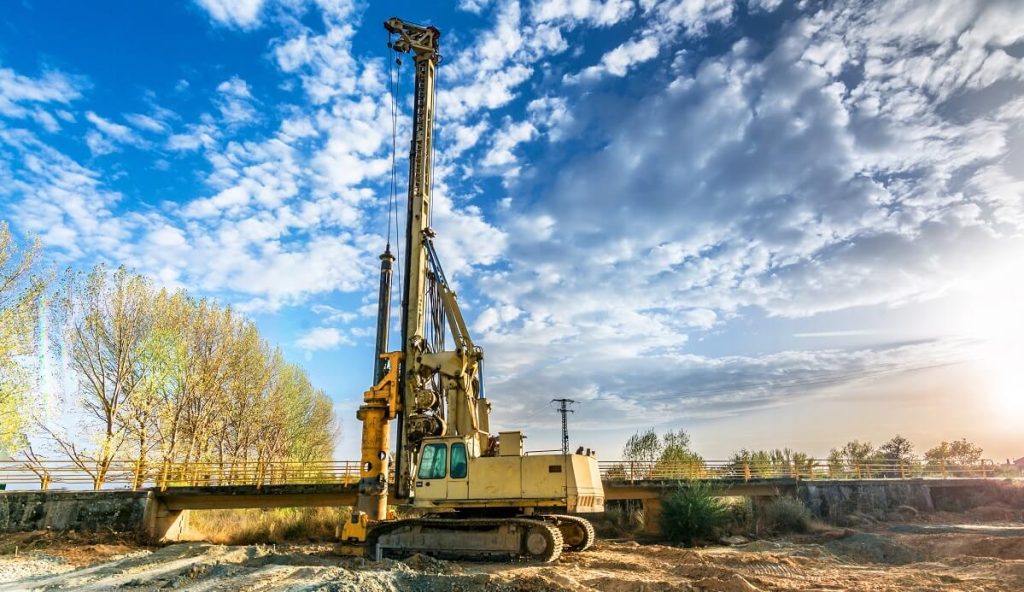
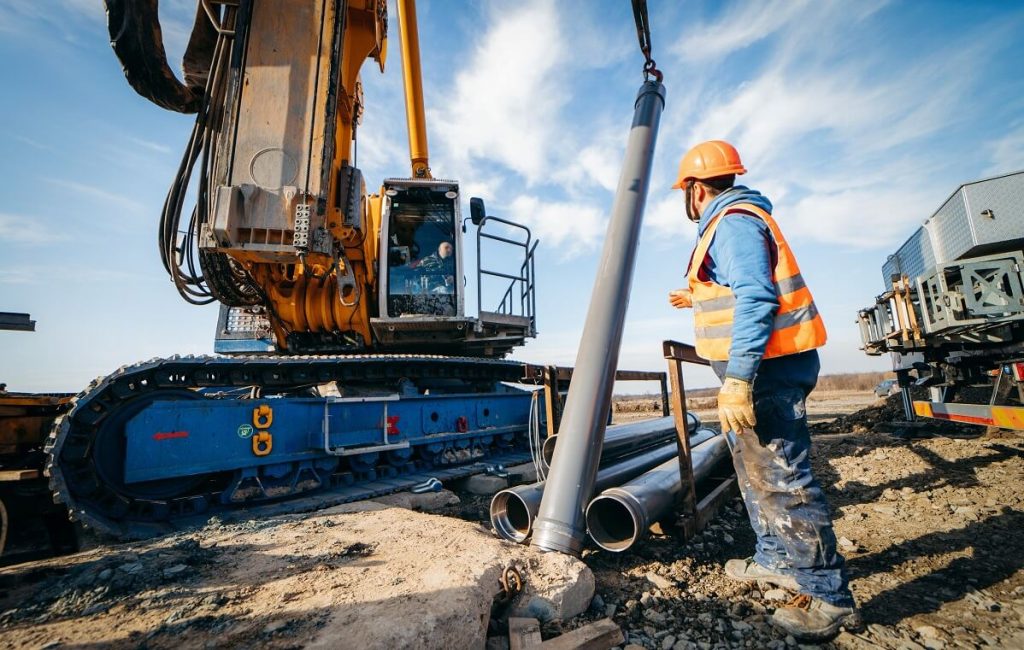
Pile foundations are reinforced beams primarily made from steel or concrete. They are driven into the ground to provide support to structures by acting as the base, using the pile to transfer the weight load to the subsoil or the underground rocky layer. However, this process of foundation piling can be done in multiple ways, leaving the question of what is the best foundation pile to choose?
Explore all of your piling options today.
Key Factors When Choosing Your Type Of Foundation Pile
Choosing the right type of foundation pile is essential for saving time and money, as well as creating a robust and lasting foundation. Before work is started, your chosen company should assess the building site to determine the most effective piling method. Some of the key factors to consider when choosing which type of piling are:
- Soil type and condition – Whether you have weak topsoil or strong topsoil will affect whether you need an end bearing or friction pile for your construction.
- Load requirements of the structure – A heavier end structure will demand a higher load bearing capacity, and vice versa, affecting which pile you should choose.
- Location of the building – The site’s location, noise levels permitted, and usage of the structure will all affect the choice of piling foundation.
- Environmental factors – Waterlogged or corrosive environments may need more durable foundation piling like composite or screw piles.
- Construction expenses – Some methods of foundation piling require more extensive preparation.
Contact us for a quote on your piling.
End-bearing vs Friction Piles: What’s the difference
There are two main types of pile load transferring: end-bearing piles or friction piles.
- End bearing piles – These are designed to transfer the weight of a structure to reliable soil or a rock layer below the surface. This option is best for construction areas with weak topsoil and constructions like high-rise buildings, bridges, and heavy structures.
- Friction piles – These distribute weight through friction between the soil and the surface of the pile across its entire length. This technique is best suited for structures on soft, deep soils where a bedrock layer might not be accessible.
The Types Of Foundation Piles And Their Uses
All types of foundation piling methods require boring or drilling into the ground. However, considering the factors laid out above, choosing the best foundation pile isn’t as easy as drilling holes.
Driven Piling (Displacement Piling)
Driven piling involves displacing the soil rather than fully removing it from an area. Pre-made piles are driven into the soil using a pile driver until the desired resistance is met. A pile integrity and dynamic load test is performed to determine the structural integrity before the pile is cut and fitted with a plate to connect the structure’s foundation. They are typically made from Tubular steel or reinforced concrete with pre-pressed square sections for strength.
Driven piling best uses:
- High strength and durability make driven piling popular for building bridges or heavy structures.
- Effective for use in loose, waterlogged, and non-cohesive soils.
- A quick installation method, saving time and money.
- Due to being driven into the ground, the soil compacts the piles, increasing the bearing capacity.
- Using the latest technology, this piling can be noise and vibration-free.
Bored Piling
Bored piling is excavating holes into the ground and then filling them with concrete. A rotary drilling rig is used to create the boreholes at the desired depth, and a steel rebar cage is installed before pouring the concrete for reinforcement. Once the concrete has cured, a load test is carried out.
The best uses of bored piling include: Large-scale construction in built-up areas due to the minimal noise and vibration during installation.
- The support is ideal for skylines, bridges, and other massive city structures.
- Bored piles generally have a higher load-bearing capacity and avoid seasonal issues like frost damage.
Screw Piling (Helical Piling)
Screw Piling is installing steel piles with screw-like helical blades that are twisted into the ground by a hydraulic rotary device. The design of the helical blades creates resistance for sturdier structures. Torque resistance is monitored to determine when a suitable soil layer is reached, and the screw pile is bolted to the building’s foundations. There is no curing time for this piling method, meaning they are ready to use immediately after installation.
Screw piling best uses include:
- Great for temporary structures on soft soil, loose sand, and marshy areas.
- They are reusable, offering a more sustainable and cost-effective solution than constantly piling.
- Ideal for wind farms, solar farms, or other lightweight structures.
Sheet Piling
Sheet piles are long, thin sheets, typically made from steel, that have interlocking edges to form a wall-like structure. They are installed by positioning and driving one sheet in, typically with a hydraulic press to reduce vibration and noise pollution. Subsequently, sheets are then positioned and driven into the ground, interlocking with previous sheets to create a continuous wall.
Sheet piling is best used for:
- Unstable building sites, reinforced with loose soil or waterlogged areas.
- Primarily support retaining walls and excavations, helping to maintain soil position and stability.
- Ideal for bulkheads, dry docks, land retention, and other situations where soil and water meet.
- Great for use in coastal areas or underground.
- The sheet piles can be removed and reused, making them more cost-effective for temporary soil retention.
Mini Piling
Mini piling is smaller than normal piling and ideal for locations that are tight on space. A hole is created with a drilling rig, and a steel rod or rebar cage is inserted to reinforce the structure. The hole is then filled with concrete, and the mini pile is left to cure before being load tested.
Mini piling best uses:
- Ideal for limited access construction areas or areas with weak ground conditions
- Typically used for foundation repairs, retrofitting, and in commercial or domestic urban spaces.
- Minimal noise and vibration pollution.
Lose the stress by letting Geobond design and calculate the cost of your foundation piles.
How To Choose The Best Foundation Pile
Choosing the correct pile foundation is essential for any construction project. Conducting a thorough analysis of the soil, area, and restrictions is necessary before you begin construction. Working with experienced engineers can help to streamline the piling process by committing to an authorised, experienced engineer who can handle the construction for you.
Trust Geobond With Choosing Your Foundation Piles
For anyone choosing what type of foundation pile is best for their construction in and around London, make sure to contact Geobond. With over 60 years of experience in providing effective reinforced piling solutions, we use our comprehensive service and versatile equipment to ensure you’re choosing the right foundation pile at a reasonable price. We are fully certified, CHAS registered, and fully insured to help you build your structure with confidence. Whenever you’re choosing foundation piles, remember to choose Geobond.
See if we cover your area today.